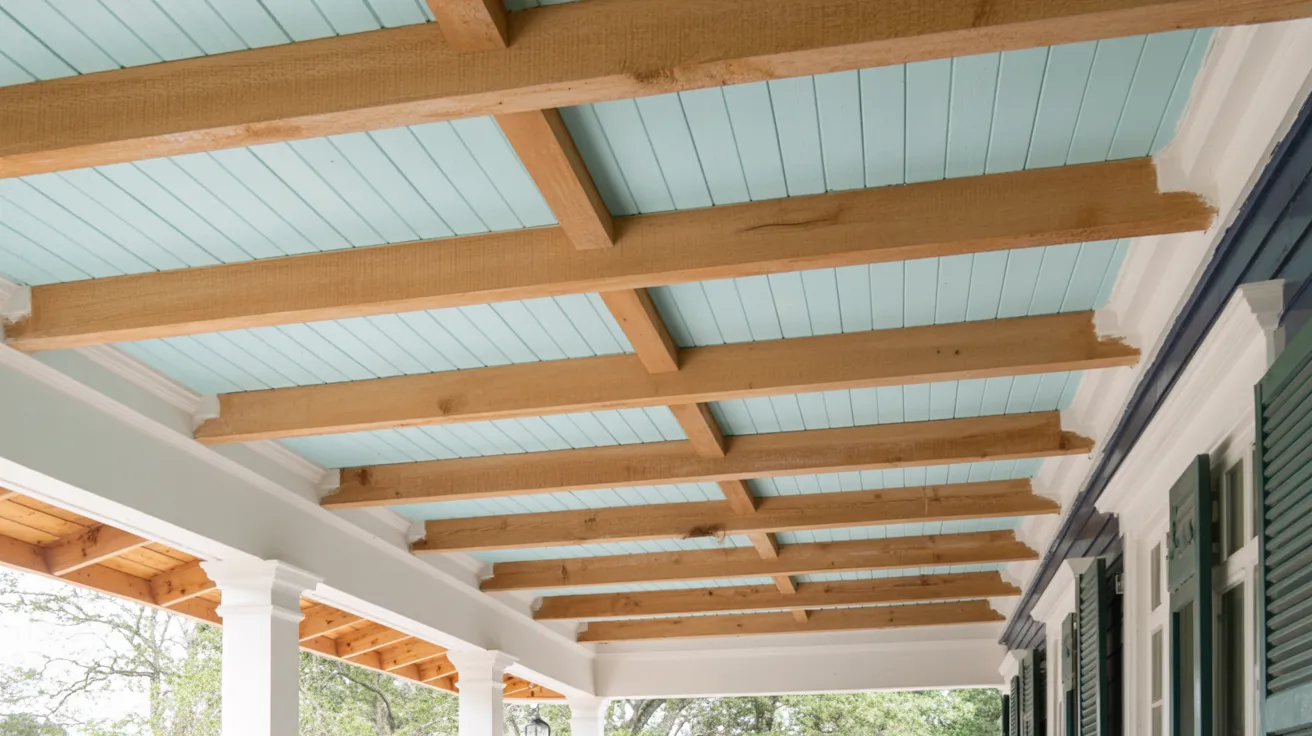
I've spent a lot of time staring at porch ceilings. Sounds odd, but once you learn about haint blue, you start noticing it everywhere.
It's that soft blue-green shade painted on porch ceilings across the South, and it has been a favorite for generations.
I've tested samples, compared chips, and learned what actually works outdoors. This guide covers the 7 best haint blue paint color shades you can use today.
I'll help you pick the right one for your home, avoid common mistakes, and feel confident before you buy a single can. We'll cover undertones, exterior pairings, and what to skip.
The right shade makes a real difference.
What Makes a Paint Color "Haint Blue"?
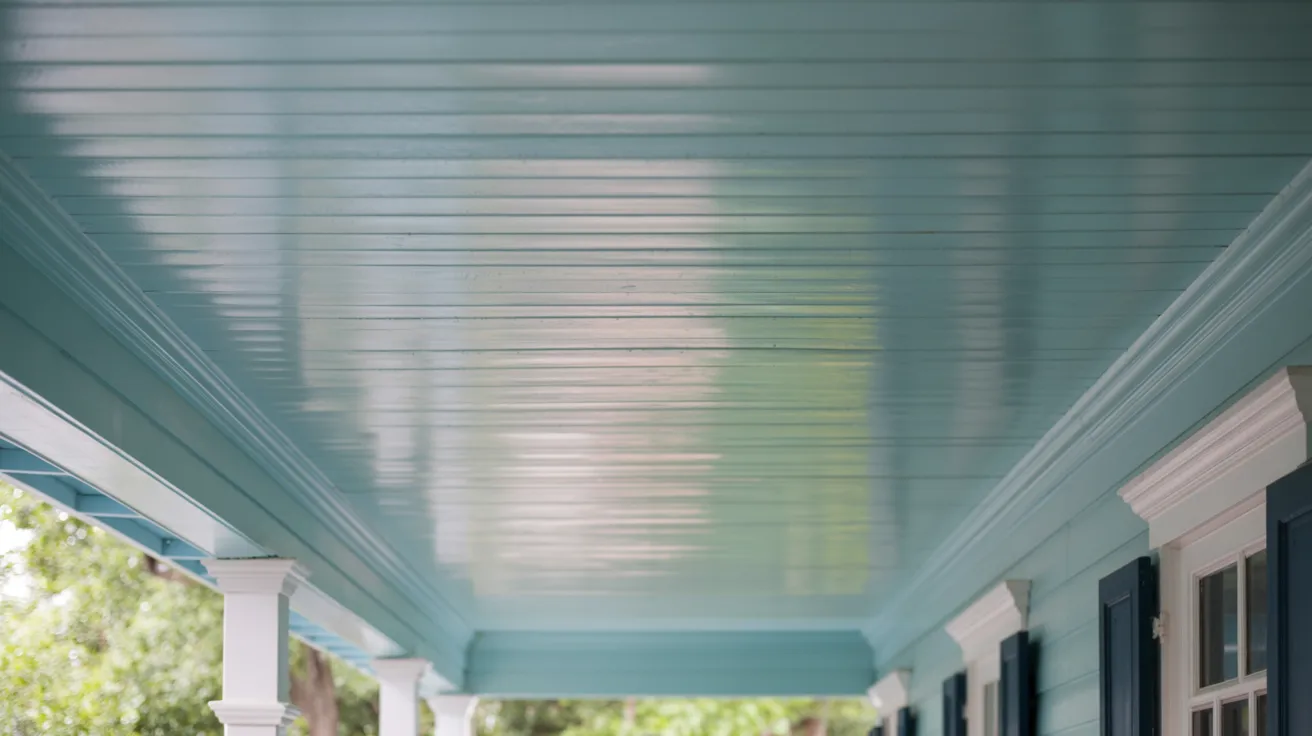
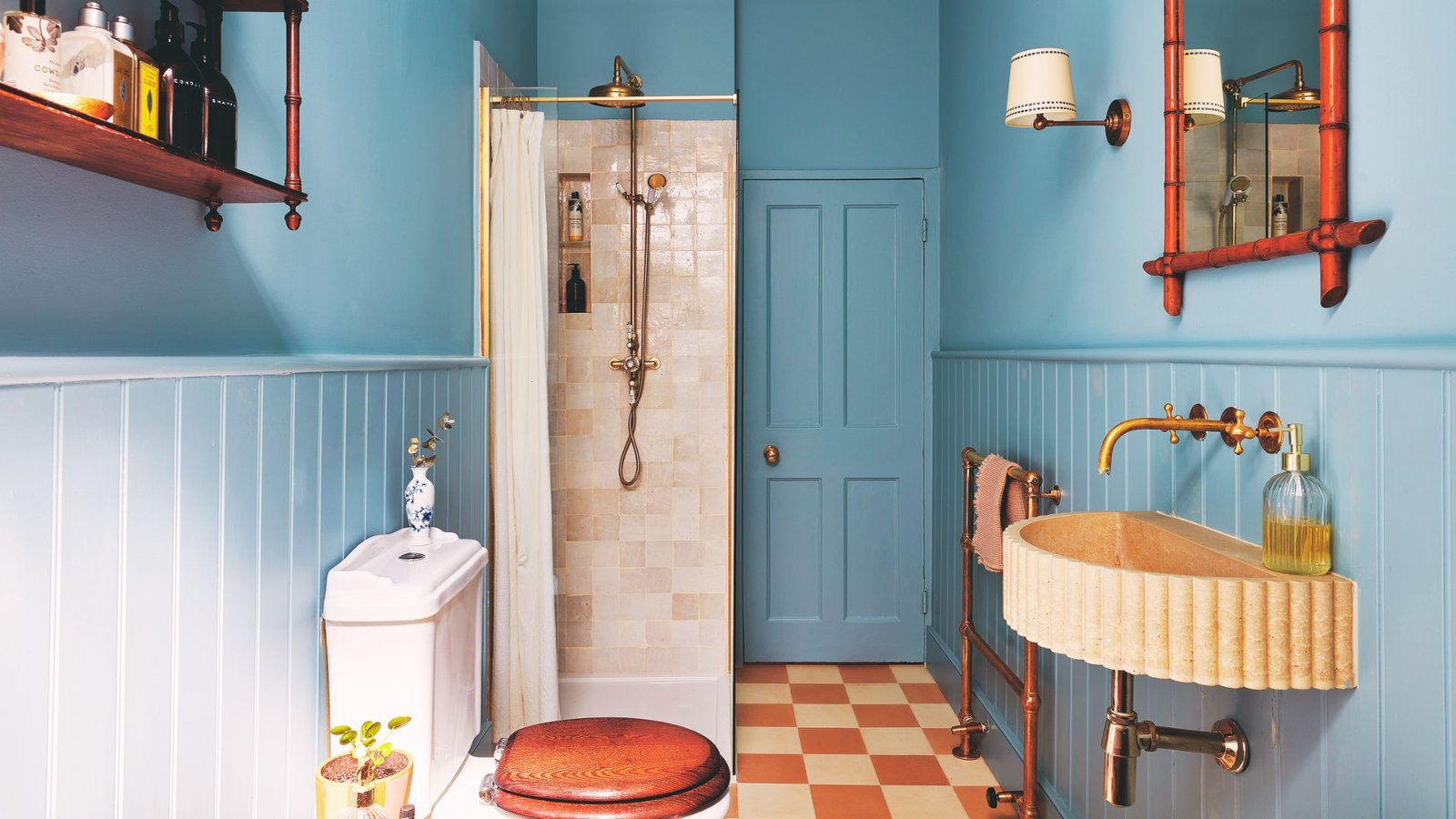
Haint blue always sits in the blue-green range. It is never a deep navy or a violet-heavy blue. Think of it as a soft mix of sky blue with a touch of sage or teal.
If a color leans too purple or too green, it falls outside the category. The balance between blue and green is what gives it that classic porch ceiling look.
Most haint blue shades also have a high Light Reflectance Value (LRV), which means they bounce light well and keep the ceiling feeling open.
The goal is to mimic a clear sky overhead. Darker shades lose that effect fast.
7 Best Haint Blue Paint Color Shades to Try Today
These seven shades cover a range of tones so you can find the best fit for your porch.
1. Benjamin Moore Bird's Egg (2051-60)

This is a clean, soft blue with just a hint of green. It reads bright and classic on a porch ceiling.
Bird's Egg is a go-to pick for homeowners who want a true haint blue without too much gray or green pulling through. It works especially well on white-trimmed porches.
2. Sherwin Williams Meander Blue (SW 6484)

Meander Blue has a slight gray influence that mutes the tone a bit. It feels calm and grounded rather than bright and bold.
This shade works well if your exterior has cooler tones like gray siding or slate accents. It blends in without disappearing.
3. Sherwin Williams Tidewater (SW 6477)

Tidewater is one of the most popular haint blue choices for good reason. It sits right in the middle, not too green, not too blue, with soft gray undertones that keep it from feeling loud.
If you want a safe and reliable pick, start here.
4. Sherwin Williams Watery (SW 6478)

Watery is a step deeper than Tidewater. It has a slightly richer tone that adds a bit more contrast to a porch ceiling.
If you want something with a little more presence without going too dark, Watery is worth a look. It still keeps that open, sky-like feel.
5. Benjamin Moore Smoke (2122-40)

Smoke leans more toward blue-gray than blue-green. It is a calm, flexible shade that pairs well with a wide range of siding colors.
If your home has a mix of tones or you want something that does not fight with the rest of the exterior, Smoke is a smart pick.
6. Sherwin Williams Rainwashed (SW 6211)

Rainwashed has an earthy, muted quality. It is a blue-green that feels natural and a little worn in, which works well for coastal homes or spaces with a lot of wood and stone.
It does not scream for attention, but it holds its own.
7. Benjamin Moore Palladian Blue (HC-144)

Palladian Blue brings a noticeable green influence while still reading as haint blue. It is one of the more colorful options on this list.
If you want a traditional look with a slightly bolder color presence, this one delivers. It pairs nicely with creamy white trim.
How to Choose the Right Haint Blue Shade
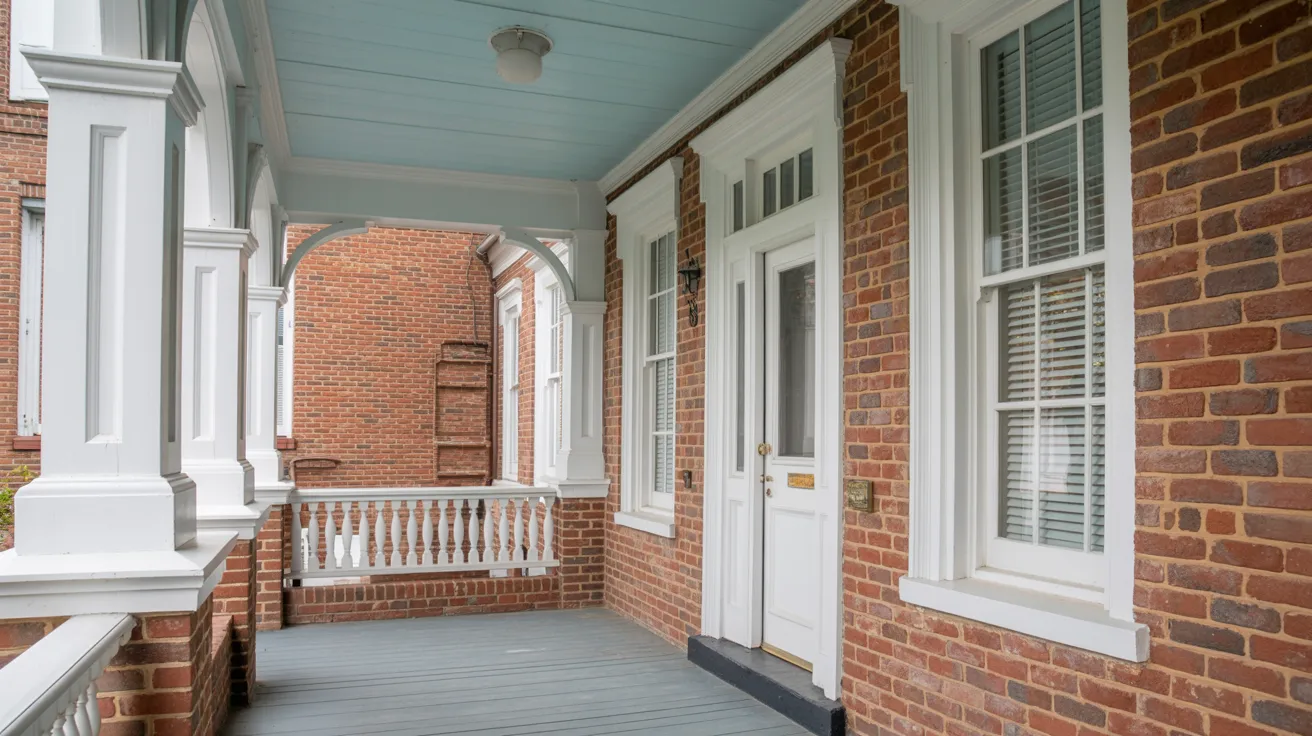
The right shade depends on your home's colors, light, and style. Here's how to narrow it down.
Match With Exterior Colors
The shade you pick should work with your siding, trim, and any brick or stone on your home.
- White siding: Almost any haint blue works here
- Gray siding: Go for cooler, grayer haint blues like Meander Blue or Smoke
- Brick or earth tones: Warmer blue-greens like Rainwashed or Tidewater hold up well
Pay Attention to Undertones
Some shades lean blue. Others lean green. A few lean gray. Look closely at the undertone before you decide.
If your home is cool-toned, stick with blue or blue-gray options. If it is warm-toned, a slight green undertone can work better. Holding paint chips next to your siding in real sunlight helps a lot.
Test Before You Paint
Always sample your top picks before committing. Paint a section of the actual ceiling and check it at different times of day.
Morning light and afternoon sun can make the same color look very different. Outdoor light changes everything.
Common Mistakes to Avoid
Small slip-ups can cost time and money. These are the ones worth knowing before you start.
Choosing Too Dark a Shade
Going too dark is the most common mistake. A heavy or deep shade on a porch ceiling loses the light, airy feel that makes haint blue work.
If the color looks rich on the chip, it will likely feel heavy overhead. Stick to lighter values.
Ignoring Home Style Compatibility
Not every haint blue shade fits every home. A bright, clean blue might clash with rustic wood siding. A gray-blue might feel flat against a bold red brick.
Look at your full exterior before choosing.
Skipping Paint Samples
Colors shift a lot outdoors. What looks perfect on a card inside a store may look completely different on a ceiling in full sun. Never skip the sample step. It saves money and regret.
Conclusion
Choosing a haint blue for your porch does not have to feel overwhelming. I remember standing in front of a paint display thinking all the blues looked the same.
They do not, once you know what to look for. The 7 shades in this guide give you a solid starting point. Sample a few, hold them up to your ceiling, and trust what you see in natural light.
Drop a comment below and let me know which shade caught your eye. I'd love to hear what you pick.
Frequently Asked Questions
What is the most popular haint blue paint color?
Sherwin Williams Tidewater is one of the most used haint blue shades. It offers a balanced blue-green tone that works well on most porch ceilings.
Can I use haint blue on an interior ceiling?
Yes, you can. Many homeowners use it in sunrooms or entryways. The soft blue-green tone adds a calm, open feel to indoor spaces too.
Does haint blue work on a covered porch with little sunlight?
It can, but go lighter. Low-light areas make colors appear darker, so a shade like Bird's Egg or Smoke tends to hold up better in shaded spots.
What finish should I use for a porch ceiling?
A satin or semi-gloss finish works best. These finishes hold up against moisture and are easier to clean than flat paint.
How is haint blue different from regular light blue?
Haint blue always has a green or gray undertone mixed in. A plain light blue sits in a different range and lacks that blue-green blend that defines the haint blue family.