I've stood in many basements wondering the same thing, what color to paint the basement ceiling? It feels like a small decision, but it changes everything.
The wrong color can make a space feel like a cave. The right one can make it feel like a real room.
In this article, I'll cover how to pick the right color, the best light, neutral, and dark options, common mistakes to avoid, and practical tips before you decide.
I've worked with dozens of homeowners on this exact problem, so I know what works and what doesn't. I'll make it simple, clear, and useful for you.
How to Choose the Right Basement Ceiling Color

Before picking any color, think about how the room will be used. Your ceiling color should match the room's purpose, light level, and overall layout.
A home theater needs different treatment than a laundry room or a home office. Start with room function since theater, office, gym, or storage all have different needs.
Then check your lighting to see if your basement has windows or mostly artificial light. Ceiling height matters too because low ceilings need lighter colors to feel taller.
Finally, make sure the color works with your walls and floor. A low ceiling with poor lighting almost always benefits from a lighter color, while a finished media room can handle something much darker.
Best Light Colors for Basement Ceilings
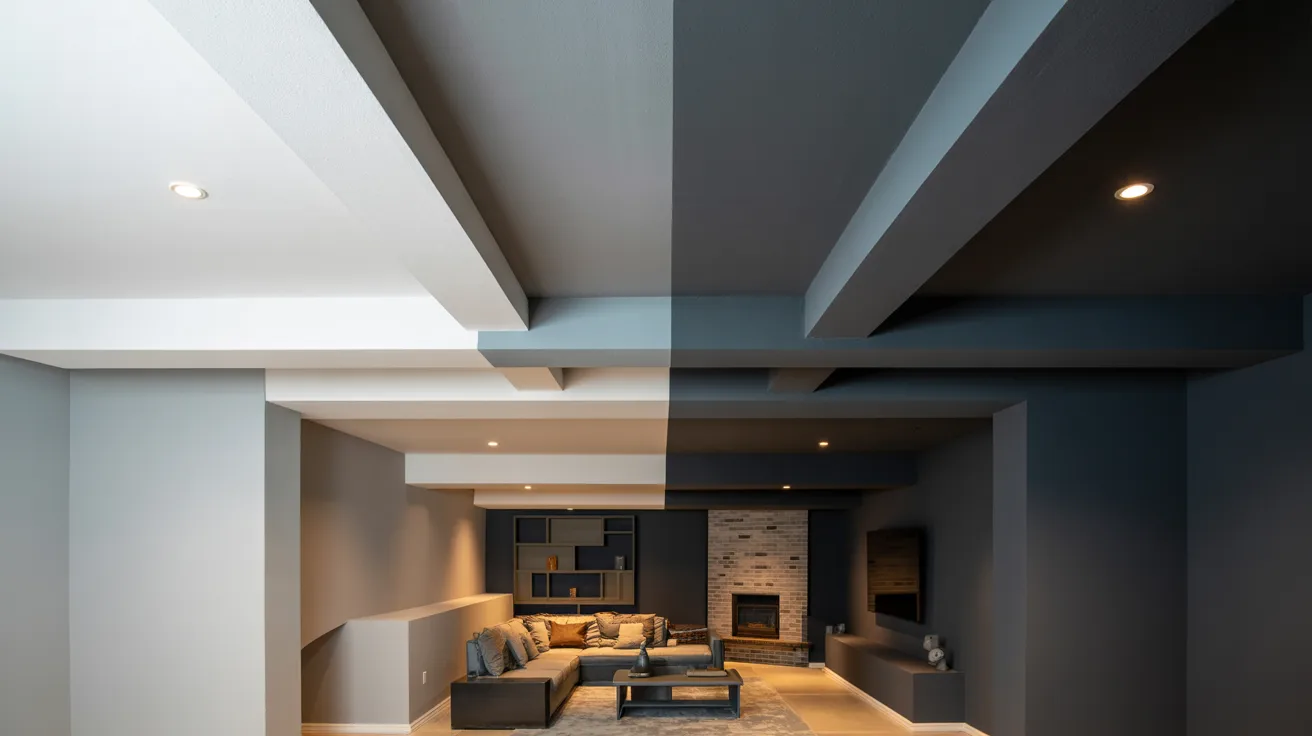
Light colors open up the space and work well in basements with limited natural light.
White and Off-White for Maximum Brightness

White is the go-to for most basements. It reflects light well and makes the room feel bigger and cleaner. Off-white adds a little softness without losing that brightness.
Good choice for offices, laundry areas, or any general-purpose space.
Cream and Beige for a Warm Neutral Look

If pure white feels too cold, cream or beige adds warmth. These shades pair well with wood tones and earthy wall colors. They feel cozy without making the space feel closed in.
Light Pastels for a Soft and Airy Feel

Soft blues, greens, or lavenders can give a basement ceiling a gentle, airy quality. These work well in playrooms or hobby spaces.
They add personality while keeping the room feeling open. Great option when you want color without going bold.
Neutral Ceiling Colors for Balanced Modern Design
Neutral tones create a calm, polished look that fits many basement styles and uses.
Soft Gray for a Contemporary Style

Gray has become a popular ceiling color for finished basements. It feels modern and clean without being as stark as white.
Light gray works in almost any room type and pairs well with both warm and cool wall colors.
Taupe for Subtle Warmth and Versatility

Taupe sits between gray and beige, making it one of the most flexible choices available.
It works well in multipurpose basement areas where the room needs to feel comfortable and put together. Not too cool, not too warm it just works.
Dark Ceiling Colors for Cozy and Dramatic Effect
Dark ceiling colors add depth and character, best suited for entertainment or media spaces.
Charcoal and Black for a Home Theater Look

Dark ceilings reduce glare and create a cinematic feel. Charcoal or matte black on the ceiling pulls everything together in a media room.
It also hides wires, ducts, and imperfections, a real plus in older basements.
Deep Navy Blue for a Calm and Immersive Space

Navy blue gives a basement ceiling a rich, layered look. It works especially well in lounges or entertainment spaces.
The color feels calm rather than heavy, which helps keep the room from feeling too small.
Dark Brown for Rich, Luxurious Ambience

Dark brown adds a warm, grounded feel to a basement ceiling. It pairs well with wood furniture, leather seating, and warm lighting.
Best for media rooms, lounges, and entertainment spaces where comfort is the priority.
Common Mistakes to Avoid When Painting Basement Ceilings
These errors can make your basement feel smaller, darker, or off-balance, worth knowing before you start.
Choosing Very Dark Colors in Poorly Lit Basements
Dark paint absorbs light. In a basement that already lacks natural light, going dark can make the space feel gloomy.
If you love dark colors, make sure your lighting setup is strong before committing.
Ignoring Lighting Conditions Before Finalizing Color
Many people pick colors in-store or online, then apply them without testing. Basement lighting is often warmer or dimmer than daylight.
Always test a paint sample under the actual lighting conditions in the room.
Not Considering Room Function
A bright white ceiling works great in a laundry room but can ruin the mood in a theater. Match your color to what the room is actually for, not just what looks good in photos.
Skipping Paint Testing on the Ceiling Surface
Basements can have moisture issues. Some paints peel or stain over time if applied to the wrong surface without proper primer.
Always test your paint on a small ceiling area first before painting the whole thing.
Tips for Choosing Basement Ceiling Paint
A few smart steps before you paint can save you time, money, and regret.
- Test under real lighting. Paint a small section and live with it for a day or two. See how it looks in the morning, evening, and under artificial lights.
- Use contrast wisely. A ceiling slightly lighter or darker than the walls creates definition. Going too matchy can make the room feel flat.
- Pick moisture-resistant paint. Basements deal with humidity. Use paint made for damp environments to avoid peeling or mold growth over time.
- Think long-term. Trends change. Neutral and light tones tend to age better and stay flexible for years to come.
- Use matte or flat finish. Shiny finishes highlight every crack and imperfection on a basement ceiling. Matte paint keeps things looking clean and smooth.
- Prime the surface first. Bare or patchy basement ceilings need a good primer coat. It helps the paint stick better and gives you a more even, lasting finish.
Conclusion
Figuring out what color to paint the basement ceiling took me some trial and error. I once painted a basement ceiling dark gray without enough lighting.
It felt like a bunker. I learned the hard way that lighting comes first.
Start with your room's purpose, check your lighting, then test your color before committing. Whether you go light, neutral, or dark, the right choice is the one that fits your space and how you use it.
Got a basement project going? Drop a comment below and share what color you're considering!
Frequently Asked Questions
What is the most popular color for basement ceilings?
White and off-white are the most commonly used colors. They reflect light and make the space feel larger, which is why most homeowners start there.
Can I paint my basement ceiling black?
Yes, black works well in home theaters or media rooms. It hides imperfections and reduces glare. Just make sure you have enough artificial lighting to balance the darkness.
Should the basement ceiling color match the walls?
Not necessarily. Your ceiling can be a shade lighter or darker than your walls to create depth. An exact match can make a low ceiling feel even lower.
Is gray a good color for a basement ceiling?
Soft gray is a solid choice for finished basements. It feels modern, pairs with many wall colors, and works in a range of room types from offices to lounges.
Does ceiling color affect how big a basement feels?
Yes, lighter colors make ceilings appear higher and rooms feel more open. Darker colors do the opposite they bring the ceiling down visually, which can feel cozy or closed in depending on the room.